
So many parents search the internet and ask one another for The Answer:
~ my child refuses to brush their teeth
~ why won't my teenager put their dishes in the kitchen
~ what consequences apply for bad behaviour in school
...and the like.
Parents are looking at the behaviour, and the outcome of the behaviour, and trying to effect meaningful change at that level.
It can't work.
It can't work for a number of reasons, starting with 'behaviour doesn't start on the behaviour part of the chain.'
What chain?
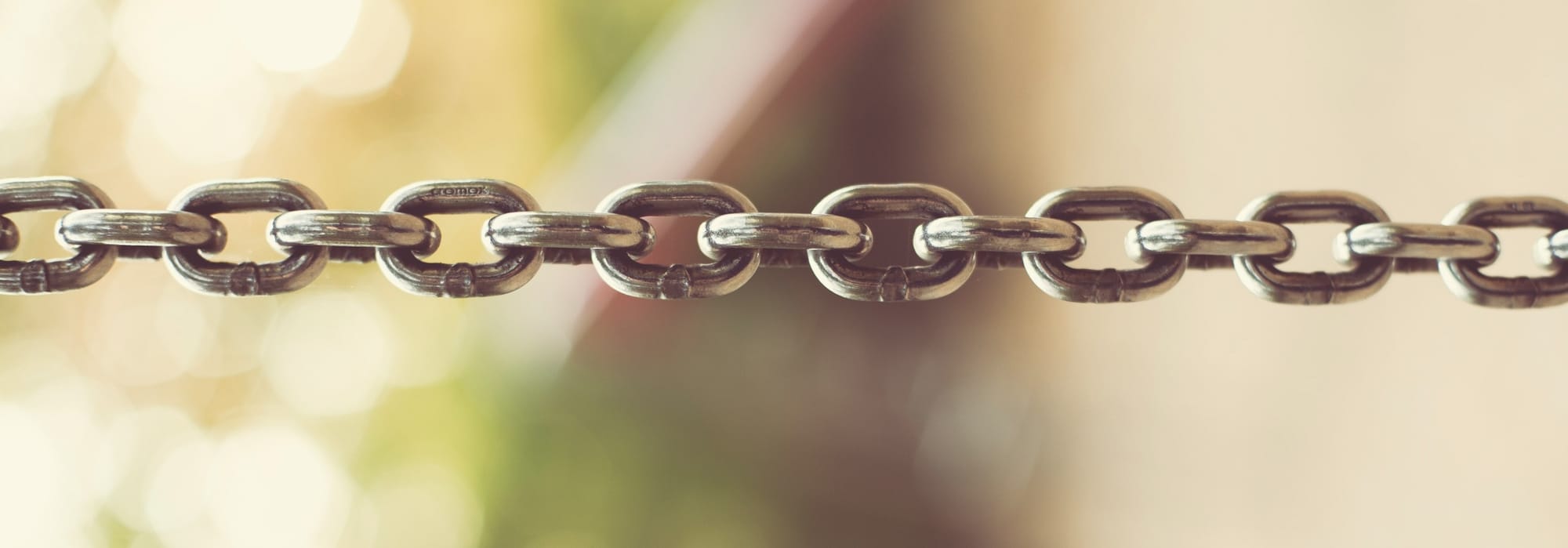
The Adaptation Chain
Behaviour doesn't happen in a vacuum, and it isn't the origin of anything. Behaviour is an endpoint, not the process.
What comes before...
What doesn't come before is 'choice' --at least not the way adults think. Kids (adults) don't stand and calmly shuffle through a handful of cards labelled 'what I might do next' based on the context they're standing in. 'Oh, let's see, I could bash this kid over the head with a metal truck... or jump up and scream... or kick the adult... or punch the pillow...' No. This is not what executive function does, and it's not its absence (or offline nature) that causes 'bad behaviour.'
Nor is it 'impulsiveness.'
It's faulty modeling. Primarily from either sheer immaturity (can't think of anything else that 'works' in the given set of constraints) or, rather more often than adults would like, from what they've seen around them that appears to 'work,' ever.
Kids start out with a lot of experience that doesn't make a lot of sense. From this, they compile their best-guess map of reality: this is what the world of things (toys and furniture and walls and stuff) does, this is what siblings do, this is what parents do, this is what aunties and others do...
Their map of reality is constantly being updated, as new information pours in: that makes my stomach feel tight and hot; this put the object I was exploring far away from me; wow, that makes adults very intense; that feels great for a moment; this doesn't seem to have any affect at all. Adults sometimes call this 'testing boundaries' but 'boundaries' is the wrong word (and is often a euphemism for 'rules' which, for some reason, many adults are shy to use.) That's not what is happening. Kids (humans, bacteria, complex systems that adapt to changing factors) are looking for evidence to make sense of their world for one reason only.
To be effective.
Kids aren't 'testing' adults, or 'provoking' anything or anyone. They're trying to figure out this intensely confusing and contradictory world, using all their powers of concentration and logic (available to them.) Effectively:
When I Do This... That Happens... Sometimes... Why? Does it happen again? Why?
Our list of Rules for Parents, often, really only is 'Be Consistent' and other variations on that theme. If kids aren't 'behaving' it's probably the adults not 'Being Consistent Enough.' The behaviour - reward - punishment loop is 'too soft' ('do it harder' and 'be firm' are often companions of this 'Be Consistent' thing) ... not because that loop doesn't work at all, pretty much ever (which it doesn't --work, that is) but because parents aren't hard enough. If a child is misbehaving at school, it's because adults at home aren't hard enough...
The problem with this focus is that it's so far away from the links on the chain where the information is absorbed (links back in their past called 'how adults seem to handle things like this / this feeling' for example) so that the punishment-reward is only looking back as far as the behaviour... not what arose prior to the act.
A Life Example
Children witness and absorb this: 'when the driver is startled by another car coming too close, the driver bursts into a rage of abuse and obscenity, shouting at length at the other driver, followed by telling the story about how the other driver was trying to kill them all...' so when the child feels another child gets too close and they feel (learned meaning) 'the other child is trying to kill them all' their natural, automatic and learned behaviour is to lash out with a string of obscenities and abuse, sometimes with pushing or hitting (with whatever's at hand) ... to fulfill the 'I'll give that driver the kicking they deserve...' declarations of the adults modelling 'how to handle being startled by others.' (Did anyone other than me notice that kids don't know the other drivers can't hear this?)
And then adults say the child is 'making bad choices,' and punish them for (effectively, mimicking adult) behaviour. Which is rather inappropriate, among other things.
The Chain
The chain of events that lead to behaviour include several major components: something occurs in a child's reality; what a child perceives is happening and what it means (the driver who cut us off in traffic actually, actively, trying to kill us,) and; how resourced they are (hungry, tired, lonely, thirsty, free / autonomous, supported,) what examples have been recorded and stored (watching and listening to other drivers handling this,) and; what communication skills and maturity is available to them in the state they are in, in the moment (everyone is more mature when they're fed, rested, watered, walked, snuggled and having created than when they're hungry, tired, thirsty, unwalked, feeling alone and lacking freedom)... all precede acting on it: the visible behaviour.
Picking up only the last link in the chain is not only unreasonable (because it doesn't even look at provocation, or adult behaviour sampling –where they learned this) but it is –and this is the hill I will die on, personally, for why behaviourism is unethical– it is ineffective.
Behaviour itself is merely the endpoint of a series of links. It isn't the decision about 'what this means' or 'how resourced am I to handle this challenge' or even 'which of the models of behaviour that I have seen in my world is best to handle this, right now' --it's the product of all of those. In some ways (certainly for young children and hormonally-crippled teen brains) it's the completely natural and inevitable product of those.
A child isn't going to spontaneously create a less-instinctive, less-immature, or less-self-referenced view of the world than the adults she's surrounded by (which, by the way, includes the media --news, movie trailers, what she can hear from her room after bedtime, and all.) Objectively, parents know this:
Immature and unskilled children do not create maturity and skill in a vacuum, on their own.
But they treat the endpoint of a logical, and visible, series of links as if the child should.
And punish, or bribe (reward to control,) accordingly.

Member discussion: